
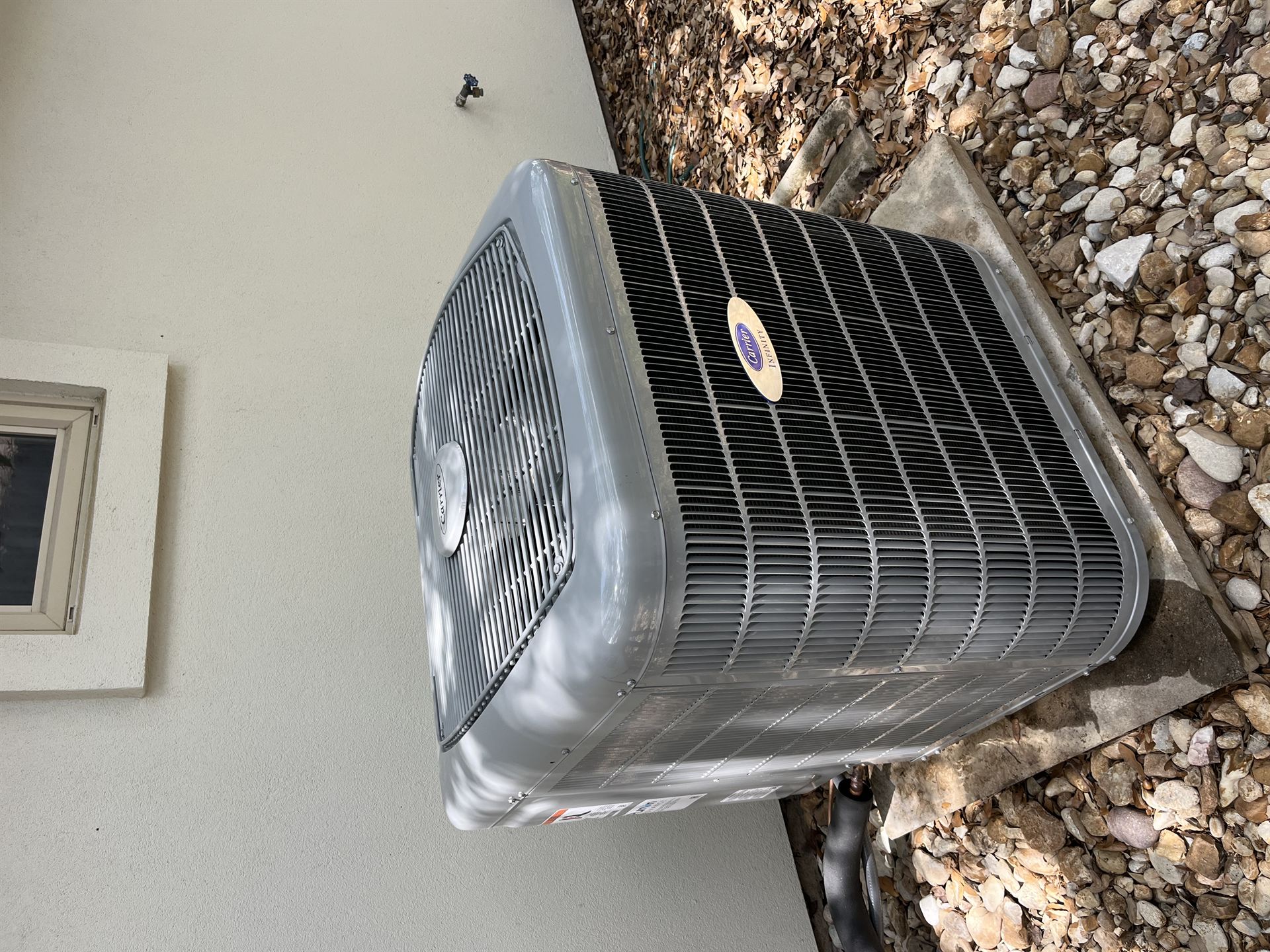
A healthy air conditioner has a sound signature you stop noticing within a week of installation — a soft whoosh at the registers, the muted hum of the outdoor condenser cycling on, and very little else. The minute that baseline changes, your system is telling you something. In a Central Texas summer, when outdoor temps regularly push past 100°F and your compressor is running 12+ hours a day, those new HVAC noises are usually the first warning sign of a problem that's going to get expensive if you ignore it.
Most of the homes we service in Buda, TX were built between the early 2000s and today's new construction in subdivisions like Whispering Hollow and Garlic Creek. That means we see a lot of 10–20-year-old condensers paired with original ductwork running through unconditioned attics that hit 140°F in July. Heat, age, and constant runtime are a hard combination on equipment — and they're exactly why we get so many "what's that sound?" calls every summer.
Here's how to read the noises your system is making before they turn into a full breakdown.
1. Rattling
Rattling usually points to something loose. If it's coming from a supply register, the louvers or screws have worked loose — a Phillips screwdriver fixes most of those in under a minute. If the rattle is deeper in the system or in the outdoor unit, it's often a loose service panel, a failing contactor relay, or debris that got pulled into the condenser fan. Turn the system off and take a look before running it again.
2. Screeching or Squealing
A high metal-on-metal squeal almost always traces back to the blower assembly or the outdoor fan motor. Older belt-driven blowers (still common in homes built before 2005) develop belt wear that sounds exactly like worn brake pads on a truck. Newer direct-drive units squeal when the motor bearings dry out. Bearings can sometimes be relubricated, but if the motor is more than 10 years old, replacement is usually the smarter call. Shut the system down — running a dry bearing will seize the motor and turn a $400 repair into a $1,200 one.
3. Screaming or High-Pitched Hiss
If your AC starts screaming, walk to the thermostat and shut it off. That sound usually means refrigerant pressure inside the compressor has climbed past the safe operating range — typically above 400 PSI on the high side for an R-410A system. Modern units have a high-pressure safety switch that should trip, but if it doesn't, you risk damaging the compressor itself, which is the single most expensive part of the system. Call us before you turn it back on.
4. Hissing
A steady hiss is the classic signature of a refrigerant leak, often at a flare fitting, a corroded evaporator coil, or a pinhole in the line set. With the EPA phasedown of R-410A already underway and newer A2L refrigerants coming online, refrigerant costs have climbed sharply over the last two years — finding and sealing a leak early saves real money. If the hiss is coming from inside a wall or ceiling, it's more likely a duct leak pulling conditioned air into your attic.
"Nine times out of ten when somebody calls me about a hiss, they've already lost half their charge," says Brian, owner of Bee Comfortable. "We can fix it, but the sooner you call, the less refrigerant we have to replace."
5. Scraping or Grinding
Scraping is mechanical — a fan blade hitting the shroud, a blower wheel that's come loose on its shaft, or a piece of attic insulation that got sucked into the return. This one rarely fixes itself, and continuing to run the system will chew up the housing. Cut power at the thermostat and the disconnect, then call for a AC repair service visit.
6. Banging or Clanking
A hard bang on startup or shutdown usually means a loose compressor mount or a broken internal component inside the compressor itself. A rhythmic clank from the air handler is often an unbalanced blower wheel — common after a bad duct cleaning or when buildup breaks loose from the blades. Either way, the longer it runs unbalanced, the more damage you do to the motor shaft and bearings.
7. Clicking or Humming at the Outdoor Unit
A single click when the system calls for cooling is normal — that's the contactor closing. Repeated clicking with no startup, or a low electrical hum where the compressor tries to start and fails, almost always points to a failed capacitor. Capacitors are one of the most common summer failures we see in Buda, TX simply because attic and outdoor temperatures cook them. They're an inexpensive part, but a failed capacitor left alone can burn out the compressor windings — a repair that often costs more than replacing the whole condenser.
When to Shut It Down vs. When to Keep Running
A good rule of thumb: rattles and rhythmic noises can usually wait a day or two for a scheduled visit. Screaming, grinding, hissing, electrical humming, or any burning smell means power off, now. Bee Comfortable is a licensed HVAC contractor (License #TACLB135763E) serving Buda, TX and surrounding communities since 2013, and we'd rather get you on the schedule before a $300 part takes out a $2,500 compressor.
Routine maintenance catches most of these noises before you ever hear them. A spring AC tune-up checks capacitor microfarad readings, refrigerant pressures, blower amp draw, and contactor condition — all the components that make the worst summer noises when they fail.